
What are antioxidants?
They are nutrients that help to neutralise free radicals and prevent oxidative damage by donating an electron to the free radical, thus helping to neutralise it.
What are free radicals?
They are high unstable molecules that that have an unpaired electron in their outer shell. These free radicals can cause oxidative damage to DNA, polyunsaturated fatty acids (for example in the phospholipids of cell walls), and to proteins.
How do free radicals accumulate in our bodies?
Free radicals are formed during normal metabolism so they are in a way inevitable, however, a large accumulation of them is not normal. They come about as a result of exposure to external factors such as cigarette smoke, over exposure to UV light, air pollution, or other toxins. The oxidative damage that they cause is thought to be involved in the aging process (E. Stadtman, 1997), and in the development of chronic diseases such as cancer and heart disease (V. Gladyshev, 2014).
How can we fight against free radical damage (aka: oxidative stress)?
Through food of course ;)!! Antioxidant nutrients such as vitamins C (aka: ascorbic acid), vitamin E, and carotenoids such as beta-carotene and lycopene.
- Ascorbic acid: oxidises to dehydroascorbic acid as part of this process. Interestingly, ascorbic acid plays an integral role in the regeneration of vitamin E after it has interacted with free radicals.
- Vitamin E: is located in the phospholipid bilayer of cell membranes, where it protects these membranes against oxidative damage. It is also co-located with lipoproteins such as LDL (low density lipoprotein) where it protects against oxidative damage.
- Carotenoids: lycopene in particular, can quench free radicals. Lycopene is the most efficient in its antioxidant activity of all carotenoids. However, research as shown that a combinations of carotenoids through diet appear to be most effective for our bodies (see below). It is important to note that over exposure to beta-carotene through dietary supplements may result in pro-oxidant i.e. negative health effects.
A diet that is rich in antioxidants can promote antioxidant activity. This means consuming fruits and vegetables as they hold the most amount of naturally occurring antioxidants. Below are some great examples of food from each of the nutrients discussed above:
Vitamin C
- kiwi fruit
- citrus fruit
- strawberries
- brussels sprouts
- guava
- capsicum
Vitamin E
- sunflower oil
- wheat germ oil
- margarine
- safflower oil
- nuts
Carotenoids
- carrots
- spinach
- pumpkin
- mango
- sweet potato
For those of you that supplement antioxidants for reasons mentioned above take a look at these articles…
Evidence for Antioxidant Supplements and Disease Prevention
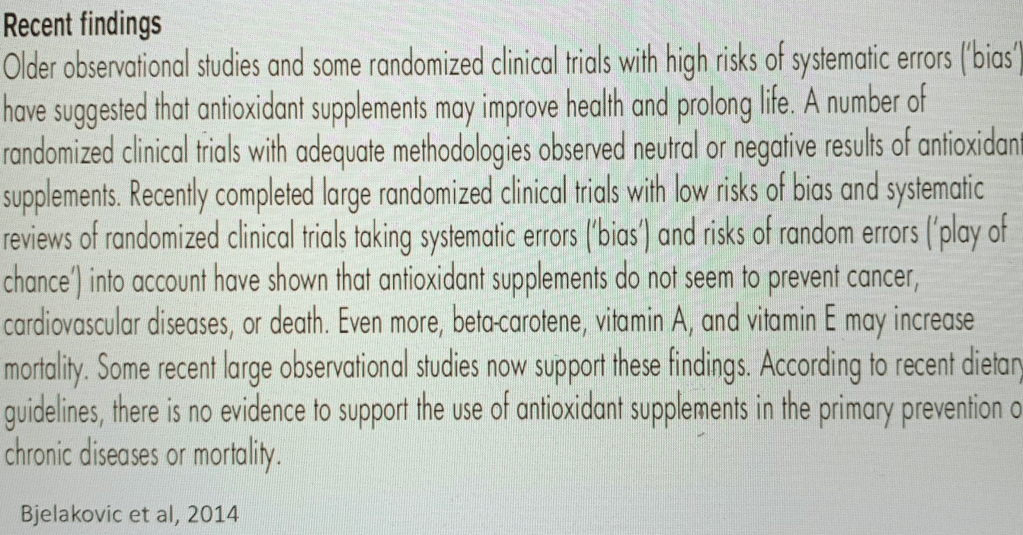
Bjelakovic et al, 2014. doi: 10.1097/MCO.0000000000000009.
Two Beta-carotene Supplementation Trial Changed our Thinking about Supplements
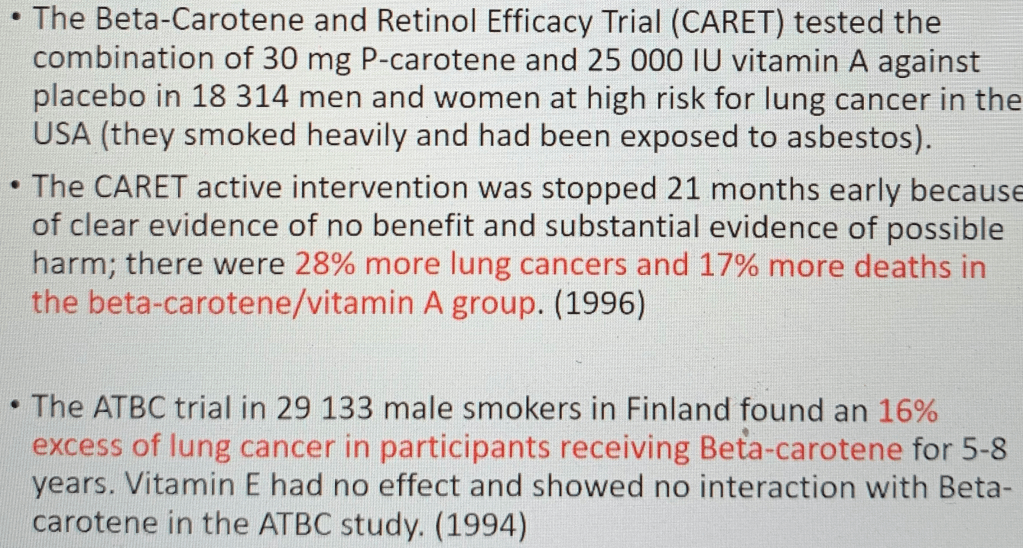
G. Ommen et al, 1996. http://doi.org/10.1093/jnci/88.21.1550
In summary (of above articles):
Nutrients from Food versus Nutrient Supplements
- Evidence for high doses for prevention is limited – and for some supplements, high doses are dangerous, especially in high risk groups.
- More evidence for vegetables and whole grains.
- Vitamins and minerals supplements don’t seem to provide the same benefit as when contained in food – but the interactions within food are not fully understood either.
- Due to only a small amount of research/science behind antioxidants we still don’t know what combination of antioxidants work the best for our bodies nor the amount that we need to consume for the best outcome for our health.
Circumstances where supplements may be recommended
- Pregnancy (e.g. folate, iodine)
- Diagnosed deficiency
- Diagnosed malabsorption issues (e.g. coeliac disease, bariatric surgery)
- At risk groups (e.g. elderly)
ALWAYS consult your health professional to see what’s best for you!

 Talking with Taylah
Leave a reply to 1. Ageing is a Disease? – Talking with Taylah Cancel reply